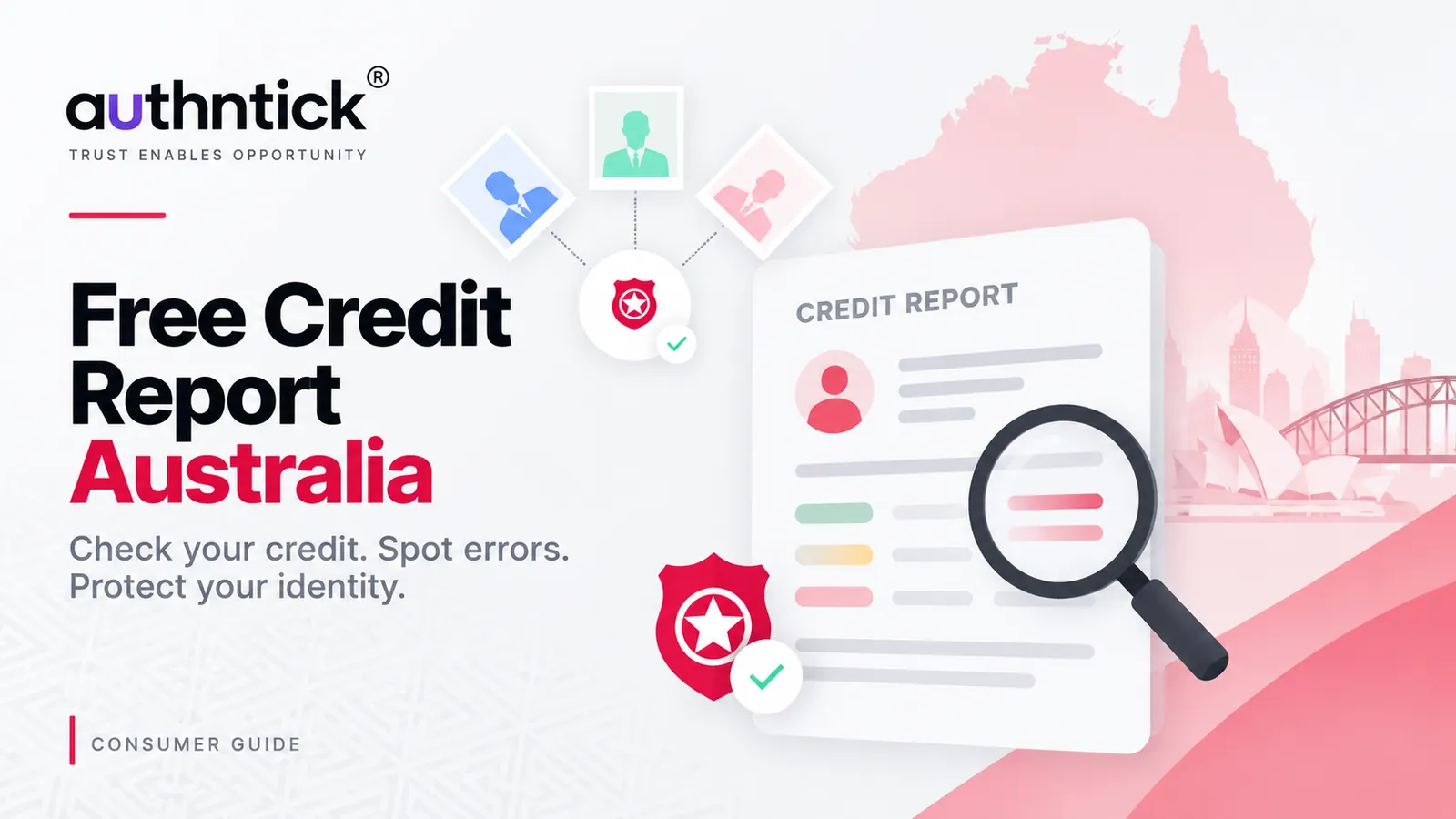
A credit report is one of the clearest ways to see what lenders may see about your credit history. This guide explains how to request a free credit report in Australia, review it for errors or identity fraud, and place, extend or lift a protective ban.
What is a credit report?
An Australian credit report is a record of credit-related information held about you by a credit reporting body. It may include identifying details, current and previous credit accounts, repayment history, defaults, credit applications, public-record information and the organisations that have requested access to your report.
Credit providers may use this information when assessing an application for a loan, credit card, buy now pay later service or another credit product. Different credit reporting bodies may hold different information, so one report may not be identical to another.
Credit report
Your credit information
A detailed record of credit accounts, repayment conduct, enquiries and other reportable information associated with you.
Credit score
A calculated rating
A number or band calculated from information in a report. Providers can use different models and ranges, so scores may differ.
A credit report and a credit score are not the same thing. If you search for a free credit score Australia service, read its privacy terms and check whether it is offering a report, a score, ongoing monitoring or a paid product. For an independent overview, see MoneySmart’s guidance on credit scores and credit reports (external government website).
Can I get my credit report for free?
Australian consumers can generally request a free copy of their credit report from a credit reporting body every three months. A free report may also be available in other circumstances, including after credit is refused or after a correction is made. Eligibility and provider processes can change, so confirm the current terms on the official website.
A search for a free credit check Australia can show both free reports and paid monitoring subscriptions. You should not need to provide payment details simply to exercise the free-report option. Check the product name, price and renewal terms before continuing.
Official provider options
Request your free credit report
If you are thinking “how do I check my credit report?”, start with the official consumer pages below. These are external providers. AuthNTick does not receive the form, your identity evidence or the resulting report, and neither provider is represented as endorsing AuthNTick.
External provider
Experian
Experian provides an official consumer pathway to access an Experian free credit report and separate tools to manage a fraud-related ban.
- Request your Experian credit report ↗(opens external website in a new tab)
- Place, extend or lift an Experian credit report ban ↗(opens external website in a new tab)
Provider services and optional paid products may differ. Confirm that you have selected the free report option you want.
External provider
Equifax
Equifax provides consumer credit services, including a free-report option alongside optional paid credit and identity monitoring products.
- Access Equifax consumer credit services ↗(opens external website in a new tab)
- Place, extend or remove an Equifax credit report ban ↗(opens external website in a new tab)
The provider page contains free and paid options. Read the price and subscription details before choosing.
What should I check on my credit report?
When learning how to check your credit history, work through the report methodically rather than looking only at the score. Compare the information with your own records.
- Your name, date of birth, addresses and other identifying details are correct.
- Every credit account, lender and credit limit is familiar to you.
- Opening and closing dates match your records.
- Repayment history, arrears and defaults are accurate.
- Credit enquiries correspond with applications you actually made.
- Court, insolvency or other public-record information belongs to you and is current.
- No duplicate debts or accounts appear.
- No unfamiliar contact details suggest that somebody changed your information.
An account, debt or enquiry you do not recognise can indicate an administrative error, but it can also be a sign of identity fraud. Keep notes and copies of relevant records, but store the report securely because it contains sensitive personal and financial information.
Correcting incorrect credit report information
If information is wrong or out of date, contact the credit provider that supplied it or the credit reporting body holding the report and ask for a correction. Provide a clear description of the disputed item and any evidence requested through the provider’s secure process.
You can ask to correct credit report information yourself for free. Accurate negative information cannot simply be deleted because it is inconvenient. Be cautious about paid “credit repair” services that promise to remove valid listings or quickly improve a score. MoneySmart explains how to correct credit-report errors yourself and assess credit-repair claims (external government website).
If a correction request is not resolved, read the provider’s complaint process and current external dispute-resolution options. AuthNTick cannot correct or negotiate a consumer credit listing.
Fraud protection
What is a credit report ban?
If you have been, or are likely to be, the victim of fraud including identity fraud, you can ask a credit reporting body to place a temporary ban on your consumer credit report. People sometimes call this a “credit freeze Australia”, although Australian official guidance generally describes it as a credit report ban or ban period.
During a ban, the credit reporting body generally must not use or disclose your consumer credit report unless you give express written consent or a limited legal exception applies. If a credit provider requests it, the provider is told a ban exists. The initial ban is generally 21 days and is free. Read the OAIC guidance on fraud and your credit report (external government website) for current rights and exceptions.
Place, extend or lift a credit report ban
Manage a ban directly with the relevant credit reporting body. Because different bodies may hold different information, make sure your request covers each body that may hold a report about you. A provider may offer to pass a request to another body, but confirm which reports are protected.
Place a ban
Use the official provider form if you believe you have been, or are likely to be, the victim of fraud. The initial ban period is generally 21 days.
Extend a ban
If the fraud risk continues, request an extension before the initial period ends. The reporting body may ask for information supporting the continuing risk.
Lift a ban
Ask each relevant reporting body to lift its ban when appropriate, including before a legitimate credit application. Identity verification may be required.
What to do if identity fraud is suspected
Act promptly if your identity fraud credit report review reveals an unfamiliar account, enquiry or debt, or if identity documents have been exposed in a data breach.
- Contact the relevant financial institution.
Tell the lender or account provider about the suspicious activity using verified contact details.
- Place a credit report ban.
Use the official reporting-body process and make sure all relevant reports are covered.
- Request and review your reports.
Look for other unfamiliar accounts, applications, limits, addresses or enquiries.
- Secure affected accounts.
Change compromised passwords, enable multi-factor authentication and contact document issuers where appropriate.
- Report and document the incident.
Keep dates, reference numbers and secure copies of correspondence. Follow current government reporting guidance.
- Get specialist support.
Follow the OAIC identity-fraud response guidance (external government website) and consider Australia’s identity and cyber support services.
Can AuthNTick manage my credit report?
No. Consumer credit reporting is a separate regulated activity. AuthNTick does not issue consumer credit reports, calculate or change credit scores, correct credit listings, or place, extend or lift a credit report ban. You must contact the relevant credit reporting body directly.
AuthNTick is an educational and identity-protection resource and provides approved services such as identity verification, Nationally Coordinated Criminal History Checks, employment background screening and other identity services. Those services are distinct from consumer credit reporting.
A separate AuthNTick service
Need identity verification or background screening?
Explore AuthNTick’s business identity-verification and workforce-screening services separately from the consumer credit-report options above.
Related AuthNTick resources include our guide to the Document Verification Service (DVS) and identity verification, our privacy and data-handling information, and the AuthNTick consumer and background-check education blog.
Frequently asked questions
Is a credit report free in Australia?
Australian consumers can generally request a free copy of their credit report from a credit reporting body every three months. Other circumstances may also allow a free report. Check the current eligibility and process on the provider’s official website.
Can AuthNTick give me a free credit report?
No. AuthNTick is not a consumer credit reporting body and does not issue consumer credit reports. Request your report directly from an official credit reporting body such as Experian or Equifax.
Is a credit report the same as a credit score?
No. A credit report is a record containing credit-related information about you. A credit score is a number or rating calculated from information in a credit report. Scores and scoring ranges can differ between providers.
Does checking my own credit report affect my score?
Checking your own credit report is different from applying for credit and does not affect your credit score. A credit application can create an enquiry on your report.
How long does a credit report ban last?
An initial fraud-related credit report ban is generally 21 days. If the fraud risk continues, you can ask the relevant credit reporting body to extend the ban. Confirm current requirements directly with the provider.
Can I access my credit report while a ban is active?
Yes. You can still request your own credit report while a ban is active. The ban restricts the credit reporting body from using or disclosing the report, subject to limited legal exceptions and your written consent.
Should I place a ban with every credit reporting body?
Because different credit reporting bodies may hold different information, make sure the ban covers each body that may hold a report about you. A provider may let you ask it to pass the request to another body, but confirm what has been actioned.
Can a lender access my report during a ban?
Generally, a credit reporting body must not use or disclose your consumer credit report during a ban unless you provide express written consent or a legal exception applies. A legitimate credit application may therefore be delayed or require extra steps.
Should I pay a credit-repair company?
Be cautious. Incorrect information can be disputed directly with the credit provider or credit reporting body for free. Accurate negative information cannot simply be removed, and paid credit-repair services may charge for steps you can take yourself.

About the author
Dev Tripathi
Editorial contributor and cybersecurity adviser
Dev Tripathi is a senior cybersecurity, risk and compliance professional with more than 20 years of experience. At AuthNTick, he contributes to and reviews guidance on Nationally Coordinated Criminal History Checks, identity verification, privacy, information security and workforce compliance.
Editorial references
Official and authoritative sources
Use these primary and authoritative references to confirm current requirements for the topic covered in this guide.
- Credit scores and credit reports Moneysmart, Australian Securities and Investments Commission
- What is personal information? Office of the Australian Information Commissioner
- Use and disclosure of personal information Office of the Australian Information Commissioner
This guide is general information, not legal advice. Government processes and employer requirements can change, so check the linked source and the requesting organisation’s instructions before acting. Read our editorial and corrections policy.
Next step
Choose an official credit reporting body
AuthNTick does not process credit-report requests. Compare the official Experian and Equifax options, or review the steps for protecting your report after suspected fraud.